
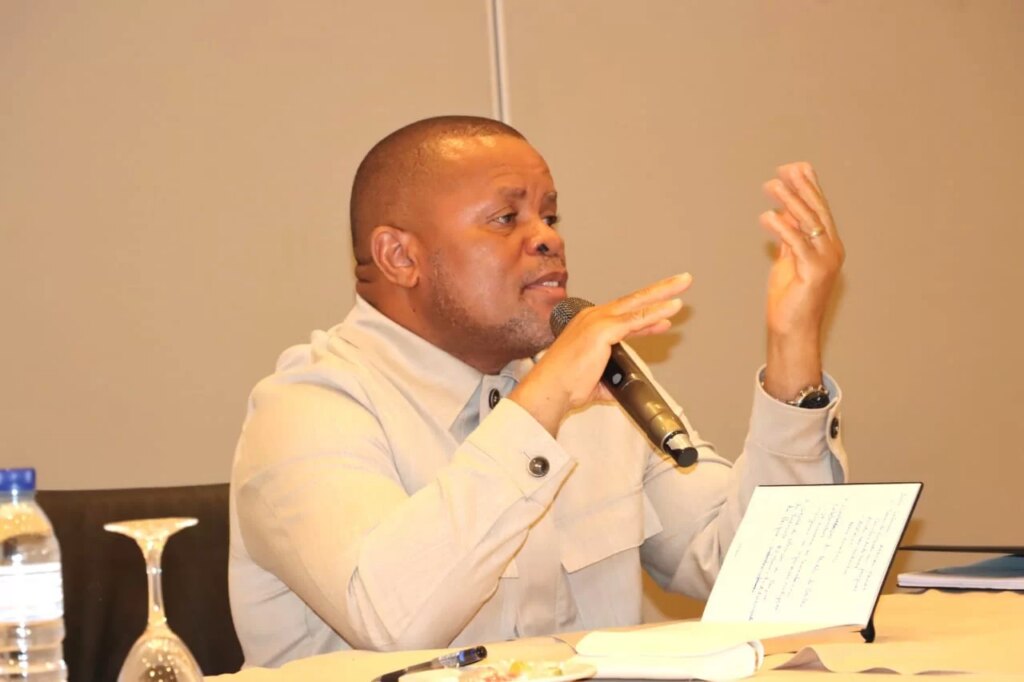
The Minister of Agriculture, Environment and Fisheries, Roberto Mito Albino, has urged project managers within the Ministry to ensure the alignment of their interventions with the targets set for the 2026/27 Agricultural Campaign, in keeping with a private sector-driven operational model.
Mito Albino made this call during a preparatory meeting for the upcoming campaign, attended by members of the Consultative Council alongside representatives from related institutions and officials from the Ministry. Provincial directors and district-level representatives joined the meeting virtually.
The Ministry presented the Agricultural Campaign Plan for 2026/27, which aims to transform the agricultural sector by sustainably increasing production and productivity, integrating value chains, and boosting the competitiveness of producers. The plan seeks to facilitate a transition from subsistence farming to a market-oriented commercial sector.
“The plan is mandatory. This is no longer a matter for discussion; it is time for implementation,” the Minister emphasized.
The Agricultural Transformation Programme, part of the support for the 2026/27 Campaign, will be financed by the Mozambican government, the World Bank, the African Development Bank, and the International Fund for Agricultural Development (IFAD), with an estimated budget of USD 189.8 million.
This initiative particularly focuses on agriculture, livestock, fisheries, and forestry, as well as policies aimed at enhancing productive capacity, food security, and the development of agricultural value chains.
Of the total budget, approximately USD 94.7 million will be allocated for emergency responses to support at-risk producers affected by the El Niño phenomenon. This assistance will include agricultural kits, silos, irrigation systems, and animal supplements to ensure food security and enhance climate resilience.
The remaining USD 95.1 million will be dedicated to developing and supporting the agribusiness sector, encompassing credit lines and institutional support in areas such as seeds, inputs, mechanisation, irrigation, livestock, fisheries, forestry, and agricultural extension services.
As part of the implementation plan, the Ministry has outlined the distribution of 905 mini-cultivators, 251 tractors, 2,075 tonnes of seeds, 3,532 irrigation systems, and 3,363 pumps and watering kits, covering areas of 2, 5, and 10 hectares respectively, fostering synergies among various ongoing projects within the Ministry.
“We must accelerate implementation, as this effort will contribute to fulfilling our mandate,” Mito Albino urged.
Thus, the 2026/27 Agricultural Campaign represents a pivotal opportunity to bolster production and productivity, invigorate the agribusiness sector, and promote a more resilient, competitive, and market-oriented agriculture.