
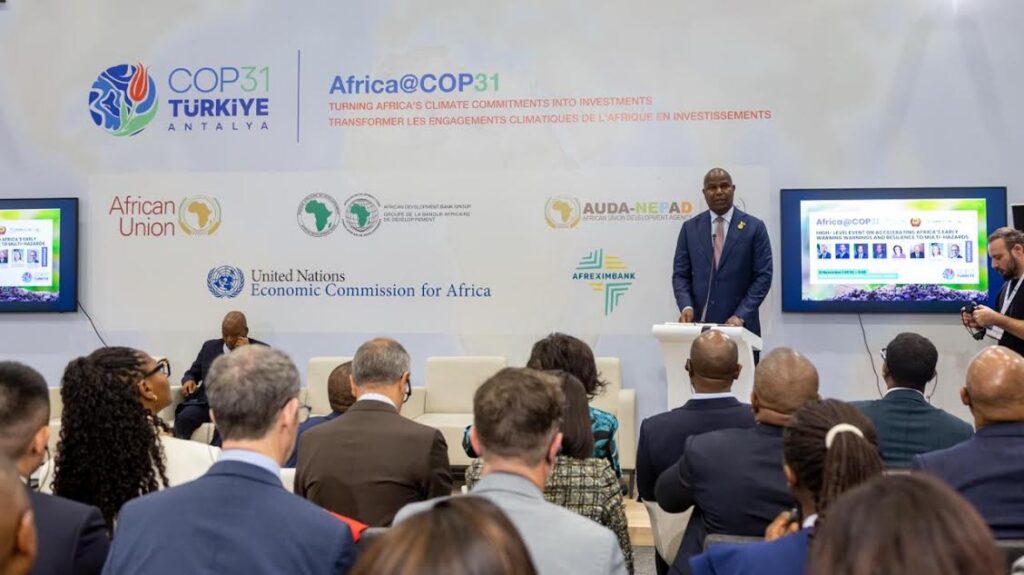
The President of Mozambique, Daniel Chapo, has called for increased investments in early warning systems and improved responses to extreme climate events, asserting that these measures are crucial for safeguarding lives and enhancing the resilience of African communities. His remarks were made during a High-Level Event on Accelerating Early Warning Systems and Strengthening Africa’s Resilience to Multiple Risks in Antalya, Turkey, on 12 November, held alongside COP31.
Chapo emphasised that the rising vulnerability of African populations to climate risks must not be regarded solely as an environmental or technical issue. He highlighted the urgent necessity to translate meteorological information into actionable decisions that effectively protect communities, noting that current conditions linked to the El Niño phenomenon serve as a stark reminder of this urgency.
According to Chapo, Africa has made strides in expanding early warning systems, with 41 countries now equipped with such mechanisms, marking a doubling of coverage since 2022. However, he pointed out ongoing challenges, including deficiencies in observation and forecasting infrastructures, the effective communication of alerts to the last mile, institutional coordination, and the availability of sustainable financing.
Speaking as the African Union Champion for Disaster Risk Management, the president insisted that warnings must specifically reach vulnerable groups, including farmers, women, youth, individuals with disabilities, and communities residing in remote areas.