
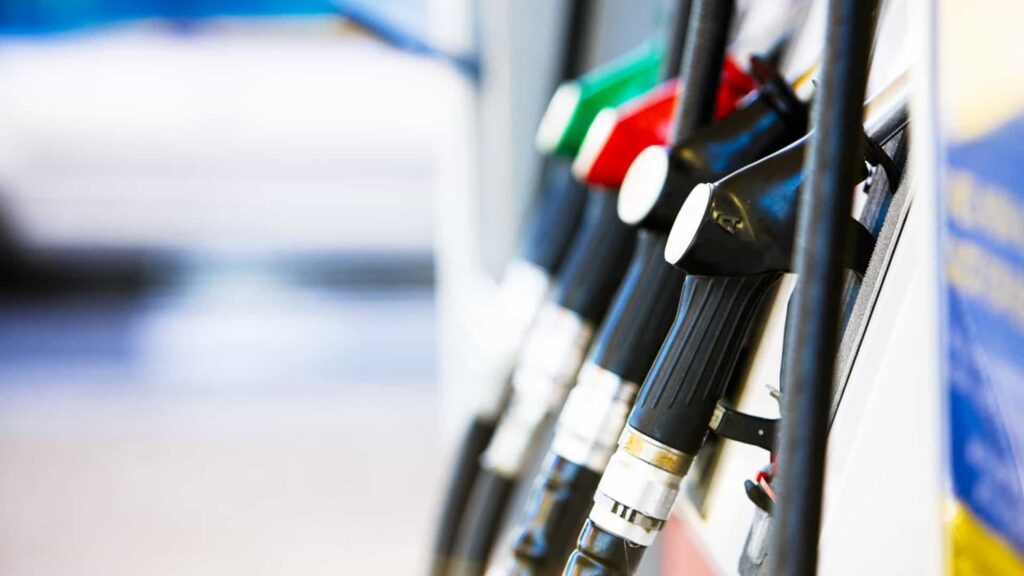
The Mozambican government plans to increase fuel taxes to enhance revenue for the construction, rehabilitation, and maintenance of the national road network. This proposal may lead to higher prices for petrol and diesel for consumers.
Transport and Logistics Minister João Matlombe announced the initiative during a government information session at the Assembly of the Republic, indicating that the administration is considering an adjustment equivalent to 15 US cents per litre of fuel, roughly 10.625 meticais.
The minister indicated that if the tax increase goes ahead, it could result in an additional cost of approximately 2.92 meticais per litre for petrol and 6.36 meticais per litre for diesel.
According to a report by the newspaper Savana, the government believes that the current fuel contribution is inadequate to meet road maintenance and conservation needs, particularly concerning the deterioration of major road corridors, such as National Road Number 1 (N1).
Currently, fuel taxes have remained unchanged since 2009, when they were set at 2.71 meticais per litre of petrol and 4.27 meticais for diesel. The government argues that inflation and the depreciation of the metical have significantly diminished the real value of this contribution.
Matlombe explained that this proposal is part of a broader three-measure strategy aimed at strengthening the financial sustainability of the Road Fund. The second measure involves raising the allocation rate from fuel revenues to 90% in favour of the fund through the revision of existing legal frameworks.
The third measure involves revising the way fuel tax is framed in the Specific Consumption Tax Code to emphasise that it is an expense borne by road users, facilitated through direct and automatic charging mechanisms.
Through these measures, the government anticipates increasing annual revenue for the Road Fund to around 20.857 billion meticais, enabling the maintenance of approximately 10,932 additional kilometres of roads and 330 kilometres subject to periodic maintenance.
The programme is also expected to include the upkeep of rural roads, with an estimated annual budget of four billion meticais.
The minister acknowledged the ongoing concerns regarding the state of the N1, despite various rehabilitation efforts over the past decade. He noted that there has been a significant reduction in investments in the road sector over the last ten years, adversely affecting the construction, rehabilitation, and maintenance of infrastructure, particularly on the road that connects the north and south of the country.
In addressing funding needs, the government aims to mobilise around 560 million dollars over the next five years. For the subsequent 15 years, it plans to ensure a sustainable annual flow of approximately 370 million dollars for the ongoing maintenance of road infrastructure throughout its lifecycle.
In tandem with the fuel tax adjustments, the government intends to grant concessions for three additional sections of the N1 for toll installation. The proposed sections are Marracuene–Xai-Xai, Xai-Xai–Pambara, and Pambara–Nicoadala, as part of a strategy to expand funding mechanisms for road maintenance.
João Matlombe stated that the government aims to extend this model to other sections, provided that technical, economic, and financial studies demonstrate its feasibility and public benefits.
He assured that the strategy is not solely focused on reconstructing the N1 but also aims to establish a management model that ensures its long-term maintenance.